

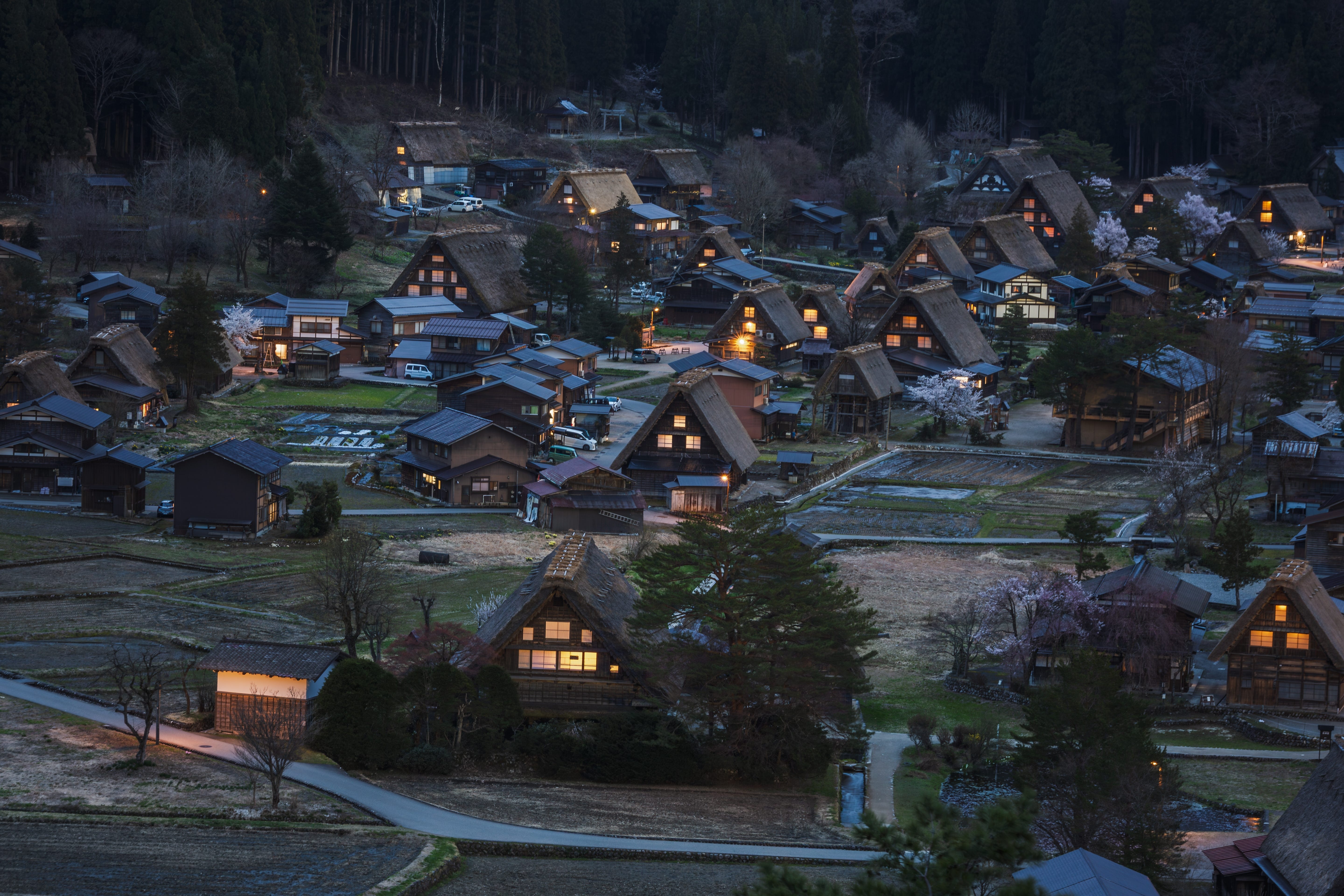
The past is a foreign country; they do things differently there.
— L.P. Hartley, The Go-Between (1953)
In 2015, UNESCO inscribed twenty-three sites across Japan as “Sites of Japan’s Meiji Industrial Revolution: Iron and Steel, Shipbuilding and Coal Mining.” Among them was Hashima Island, a derelict coal-mining facility off the coast of Nagasaki Prefecture, whose concrete ruins had attracted global curiosity as a photogenic emblem of industrial abandonment. South Korea objected. Between 1943 and 1945, approximately five hundred to eight hundred Koreans had been forcibly brought to Hashima’s undersea mines, where at least 122 died. Japan’s delegation acknowledged that “a large number of Koreans and others” had been “brought against their will and forced to work under harsh conditions,” and committed to establishing an information centre that would “remember the victims.” Five years later, the Industrial Heritage Information Centre opened in Tokyo. Rather than memorialize forced labour, its exhibits displayed testimonies from former Japanese residents denying that discrimination had occurred. All twenty-one other World Heritage Committee members called unanimously for Japan to revise the display (Nakano 2020).
This chapter argues that the Hashima dispute is not an anomaly but a structurally predictable consequence of the way heritage operates as a political process—one that selects, authorizes, and deploys the past for present purposes, often under institutional arrangements that naturalize those selections as neutral preservation. The episode illustrates a set of tensions that run through the entire field of critical heritage studies: between history as disciplined inquiry and heritage as identity-affirming practice; between expert authority and community engagement; between material preservation and the intangible meanings that people attach to places; and between national narratives and the transnational memories that contest them. Understanding these tensions requires moving beyond any simple binary between “good” history and “bad” heritage. It requires, instead, an analytical vocabulary capable of asking how particular versions of the past become authorized, whose interests that authorization serves, and what gets excluded in the process.
A key analytical thread running through this chapter is the relationship between heritage and governance. Heritage does not merely reflect existing power arrangements; it actively constitutes the subjects, categories, and territorial claims through which governance operates. When Japan’s 1950 Law for the Protection of Cultural Properties established the Living National Treasures system, it did not simply preserve intangible culture—it created a new administrative category that made certain cultural practices legible to the state while leaving others unmarked. When UNESCO designates a World Heritage Site, it does not merely recognize significance—it generates new institutional relationships, new stakeholder hierarchies, and new possibilities for both commemoration and forgetting. Reading heritage for its organizational logics rather than its celebratory content reveals how deeply the politics of the authorized past are embedded in institutional structures that present themselves as neutral stewardship.
The chapter proceeds in eight sections. It opens with David Lowenthal’s foundational distinction between history and heritage, examines how subsequent scholars complicated that binary, and then turns to Laurajane Smith’s concept of the Authorized Heritage Discourse (AHD)—the single most influential framework in the field. Subsequent sections trace the intersection of heritage theory with memory studies, the challenge posed by intangible heritage to material-centred frameworks, the problem of “difficult” and “dark” heritage that resists celebratory narratives, and the geopolitical instrumentalization of heritage in East Asia. A final section surveys recent developments—decolonial, affective, and future-oriented—that have reshaped the field since 2010. Throughout, East Asian cases serve not as exotic illustrations but as analytically productive sites where the theoretical tensions of critical heritage studies become visible in geopolitical practice.
Lowenthal’s History–Heritage Binary
David Lowenthal (1923–2018), an American-born geographer based at University College London, produced the field’s founding distinction in two books that remain unavoidable starting points: The Past is a Foreign Country (1985; revised 2015) and The Heritage Crusade and the Spoils of History (1998). His title borrowed from L.P. Hartley’s 1953 novel, but the analytical ambition was his own. Lowenthal drew a sharp line between history—disciplined, self-correcting inquiry allied to reason, scepticism, and evidential standards—and heritage—a partisan, identity-affirming practice that tailored the past to present-day purposes. Heritage, on this account, clarified pasts so as to infuse them with contemporary meaning; history explored and explained pasts that grew more opaque over time (Lowenthal 1998, x).
The distinction was intended as analytical rather than purely condemnatory, though Lowenthal’s language often carried evaluative force. He characterized heritage as quasi-religious, compared heritage artefacts to medieval relics sanctioned by present exploits rather than proof of origins, and warned that uncritical worship of a “bloated heritage” imperilled rational inquiry (Lowenthal 1998, 2–10). Yet he also acknowledged heritage’s social necessity: heritage, no less than history, was essential to knowing and acting, and its faults were inseparable from its role in sustaining community, identity, and continuity (Lowenthal 1998, 128). The tension between these two registers—heritage as dangerous distortion and heritage as social glue—runs through his entire body of work.
Lowenthal characterized the late-twentieth-century heritage boom through three interlocking themes. First, commodification: the past transformed into consumable products, from Colonial Williamsburg to open-air heritage centres. Second, nostalgia: a sentiment he defined as memory with the pain removed, projecting present dismay onto an imagined better yesterday. Third, nationalism and ethnic identity: heritage as raw material for ideological mobilization, capable in its extreme forms of producing what he called “murderous fanaticism.” The range of his examples—Elgin Marbles, Elvis memorabilia, the Holocaust Museum, Balkan ethnic conflicts, Disney’s proposed America theme park—signaled a framework that aspired to explain heritage as a global phenomenon rather than a local peculiarity (Lowenthal 1998, 89–147).
Lowenthal’s intervention sat within a broader wave of British anti-heritage criticism shaped by Thatcherite deindustrialization and the rapid conversion of industrial landscapes into heritage sites. Robert Hewison’s The Heritage Industry (1987) popularized the phrase and proclaimed that heritage was not history. Patrick Wright’s On Living in an Old Country (1985) analysed the museumification of Britain and coined the concept of “Deep England”—an imagined timeless pastoral essence deployed for nationalist purposes. Wright argued that national heritage involved extracting history from everyday life and restaging it in sanctioned sites and images. Peter Mandler’s (1997) later reassessment contextualized these debates as partly products of specific British political anxieties rather than universal insights, a qualification worth bearing in mind as the field’s analytical categories travel across cultural contexts.
Lowenthal’s intellectual antecedents are worth noting because they illuminate the particular disciplinary vantage from which the binary emerged. He built on Michael Oakeshott’s distinction between “the historical past” (understood through disciplined inquiry) and “the practical past” (deployed for present purposes), which directly prefigures the history–heritage opposition. He also drew on R.G. Collingwood’s philosophy of history, particularly ideas about historical re-enactment and empathy. His position as a geographer rather than a historian gave him an unusually cross-disciplinary vantage—one that made him attentive to the spatial and material dimensions of how societies organize their relationships to the past. Yet this same disciplinary positioning may explain why his framework underestimated the degree to which professional historical practice itself operates within the kinds of institutional and ideological constraints that he attributed primarily to heritage.
History Is Not Innocent, Heritage Is Not Simple
The critiques of Lowenthal’s framework cluster around three lines of attack, each undermining one pillar of his distinction. Taken together, they do not so much demolish the binary as reveal it to be a useful heuristic whose explanatory limits become apparent the moment one presses on either side.
The first line of attack targets history itself. If professional historical writing is shaped by narrative conventions, ideology, and institutional power, then the “disciplined inquiry” side of Lowenthal’s binary is idealized. Hayden White’s Metahistory (1973) demonstrated that historical writing is a verbal structure shaped by master tropes—metaphor, metonymy, synecdoche, irony—and modes of emplotment that are literary rather than simply evidential. Keith Jenkins’s Re-Thinking History (1991), drawing on Foucault and Barthes, argued that history is a contested discourse in which groups construct interpretations of the past to serve present purposes. Peter Novick’s That Noble Dream (1988) showed that the very ideal of historical objectivity is itself a socially constructed product of professional institutions. If history is always “for someone,” it shares key characteristics with what Lowenthal calls heritage, and the distinction becomes one of degree rather than kind.
The second line of attack rehabilitates heritage. Raphael Samuel’s Theatres of Memory (1994) remains the most important direct counter to what he called the “heritage baiters.” Samuel argued that heritage was more democratic than earlier versions of the national past and more hospitable to hitherto stigmatized minorities; that historians’ hostility reflected professional snobbery toward unofficial knowledge—family history, photography, collecting, re-enactment; and that heritage carried its own epistemological legitimacy as a major aesthetic and social movement. He accused academic historians of professional jealousy, insisting that heritage was an unwanted competitor for public attention rather than an inferior mode of understanding (Samuel 1994, 259–303). Kynan Gentry (2015) has argued that Samuel’s ideas represent a case for the democratization of heritage that remains relevant to contemporary research agendas. Roy Rosenzweig and David Thelen’s The Presence of the Past (1998), surveying 1,500 Americans, provided empirical confirmation that ordinary people engage deeply with the past primarily through heritage experiences rather than academic history.
The third line of attack, and the most consequential for the field’s subsequent development, targets the boundary itself. Laurajane Smith argued that the distinction between “good history” and “bad heritage” is not a natural fact but a product of the very discourse that authorizes certain ways of engaging with the past while marginalizing others. Rodney Harrison’s Heritage: Critical Approaches (2013) further problematized the boundary by incorporating Actor-Network Theory and assemblage thinking, drawing attention to the material and non-human agencies that heritage discourse tends to occlude. Ethnographic work has also complicated Lowenthal’s generalizations. Christoph Brumann’s (2009) fieldwork in Kyoto demonstrated heritage traditions that were not distorted, were permitted to evolve, and were not dominated by boundary-policing. Thomas Yarrow’s (2017) ethnography of Scottish heritage professionals showed heritage institutions to be more internally complex and contested than either Lowenthal or Smith had acknowledged. The binary, in short, retains pedagogical value as a starting point—but the field has moved well beyond it.
Smith Changes the Game
Laurajane Smith’s Uses of Heritage (2006) introduced the concept that has become the single most influential framework in critical heritage studies: the Authorized Heritage Discourse, or AHD. Smith defined AHD as the dominant Western discourse about heritage, one that works to naturalize a range of assumptions about what heritage is and who has authority over it. The discourse focuses attention on aesthetically pleasing material objects, sites, and landscapes that current generations are told they “must” care for and protect, so that they may be passed to future generations for education and the forging of common identity. It privileges monumentality, grand scale, innate significance tied to time depth, and scientific or aesthetic expert judgement. AHD is simultaneously a professional discourse that regulates heritage practice and a broader cultural formation that shapes public expectations about the past (Smith 2006, 11–44).
Smith’s central theoretical move was to redefine heritage itself: not an inherent property of material objects but a cultural and social process that engages with acts of remembering to create ways of understanding and engaging with the present. She argued, provocatively, that all heritage is intangible in an epistemological sense—heritage does not exist in the world awaiting discovery but is constituted through discourse and cultural practice (Smith 2006, 44–84). This was not a claim that material fabric is irrelevant, but rather that the significance attributed to material fabric is always discursively constructed.
Smith’s theoretical foundations drew on Foucault’s analysis of discourse and power, Stuart Hall’s work on representation and cultural identity, Raymond Williams’s cultural materialism and “structures of feeling,” and Norman Fairclough’s Critical Discourse Analysis. Her empirical work centred on English country houses as exemplars of AHD constructing elite class heritage, with extensive visitor survey data; the Riversleigh World Heritage Site in Australia, involving engagement with Waanyi Indigenous women; labour heritage museums; and the deindustrialized community of Castleford in West Yorkshire. These were not incidental case studies. Each demonstrated a different facet of how AHD operates: legitimating class privilege, marginalizing Indigenous knowledge, containing working-class memory, or absorbing community engagement into expert-driven frameworks (Smith 2006, 153–243).
The concept’s implications for Lowenthal are fundamental. Smith showed that the distinction between “good history” and “bad heritage” is itself a product of AHD. Lowenthal’s framework, which positioned historians as objective gatekeepers capable of separating real history from mere heritage, unwittingly reproduced the discourse’s assumptions about expert authority. Both history and heritage operate within discourse; the binary is an effect of power rather than a description of epistemological fact. What presents as a neutral analytical distinction turns out to be a mechanism for authorizing certain engagements with the past—typically those of credentialed professionals—while delegitimizing others.
Institutional embodiments of AHD include the 1964 Venice Charter, the 1972 UNESCO World Heritage Convention, ICOMOS, and national heritage legislation across the Western world. These instruments prioritize material fabric, monumentality, and expert-driven conservation frameworks. The 1972 Convention’s emphasis on “outstanding universal value” is a particularly clear instance: an apparently neutral criterion that in practice privileges monumental built heritage of the kind most abundant in Europe and least characteristic of heritage practices in much of Africa, Asia, and the Pacific (Smith 2006, 87–110).
Smith’s subsequent work took an affective turn. In Emotional Heritage (2021), based on interviews with 4,502 visitors at forty-five heritage sites across the United States, Australia, and England, she introduced the concept of “registers of engagement” and demonstrated that visitors primarily reinforce existing beliefs and emotionally invest in prior commitments rather than passively absorbing authorized narratives. This partially addressed critiques that AHD was too monolithic by showing visitors as active agents capable of negotiating, contesting, or simply ignoring the discourse’s prescriptions (Smith 2021, 42–89).
AHD has not gone unchallenged. Joar Skrede and Herdis Hølleland (2018) mounted the most sustained methodological critique, arguing that the phrase “Authorized Heritage Discourse” is itself a nominalization that reifies the discourse into a self-evident unit of explanation, obscuring who does what to whom. They demonstrated how subsequent authors anthropomorphize the concept—”the AHD maintains that…”—reproducing precisely the kind of abstraction that Foucauldian analysis should resist. Tim Winter (2013; 2014) argued that critical heritage studies risks Eurocentrism: its analytical frameworks remain grounded in Western critical theory traditions even while critiquing Western hegemony. Harrison (2013) extended beyond discourse analysis into assemblage theory, arguing for attention to materiality and non-human agency that Smith’s discursive framework underplays. Andrea Witcomb and Kristal Buckley (2013) observed that critical heritage studies tends to imply critique can happen only from academia, not from within practice—a limitation that matters when the goal is not merely to understand heritage but to change how it works. These critiques have sharpened rather than displaced the AHD framework, and the concept remains the field’s indispensable point of departure.
Where Memory Studies Meets Heritage Theory
The intersection of critical heritage studies with memory studies provides theoretical depth that the heritage–history binary alone cannot supply. The key question across both fields is the same: how do societies select, organize, and transmit knowledge about the past, and whose interests do those selections serve?
Maurice Halbwachs (1877–1945) established the foundations. His argument, developed in Les cadres sociaux de la mémoire (1925), was that individual memory is always shaped by collective frameworks—the words, conceptions, and classificatory schemes borrowed from one’s milieu. Memory is socially constructed: the past does not recur as such but is reconstructed on the basis of the present. This includes systematic forgetting—society tends to erase from its memory all that might separate individuals or distance groups from each other (Halbwachs [1925] 1992, 38–43). For heritage studies, Halbwachs demonstrated that selective remembering and forgetting are characteristic of all group memory, undermining any neat separation between objective history and partisan heritage.
Pierre Nora’s Les Lieux de mémoire (1984–1992) introduced the concept of sites of memory (lieux de mémoire). Nora’s foundational claim was that such sites exist because there are no longer real environments of memory (milieux de mémoire)—modernity has ruptured organic, lived memory and replaced it with deliberately constructed institutional sites: monuments, museums, symbols, even national languages themselves. A lieu de mémoire must operate simultaneously in three registers: material, symbolic, and functional (Nora 1989, 7–24). Heritage sites can productively be understood as lieux de mémoire, though Nora’s framework has attracted critique for Franco-centrism, cultural pessimism, and a binary thinking that mirrors the very opposition it seeks to historicize. Indra Sengupta (2009) argued that Nora’s framework fails to account for the complexity of the past in colonial and postcolonial contexts. Astrid Erll (2011) called the memory–history opposition unfruitful.
Jan Assmann and Aleida Assmann refined Halbwachs with a distinction between communicative memory—limited to approximately eighty to one hundred years, sustained through living interaction across three generations—and cultural memory—emerging when lived communication crystallizes in objectified forms such as texts, images, rites, buildings, and monuments. Cultural memory is institutional, exteriorized, and situation-transcendent (J. Assmann [1992] 2011, 36–40). Aleida Assmann (2011) further distinguished functional memory (selective, normative, canonical, group-related) from storage memory (the amorphous mass of unused memories in archives, libraries, and museums). Heritage practices—museum curation, monument preservation, ritual commemoration, UNESCO listing—are precisely the mechanisms that transform storage memory into functional memory. Jan Assmann’s concept of mnemohistory—studying not what actually happened but how the past is remembered—offers a particularly productive bridge between the two fields, dissolving Lowenthal’s binary by showing history and heritage as different registers of the same mnemonic process (J. Assmann [1992] 2011, 68–78).
Paul Connerton’s How Societies Remember (1989) contributed the argument that collective memory is transmitted not only through texts and inscriptions but through bodily practices and commemorative ceremonies. His distinction between inscribing practices (texts, monuments, archives) and incorporating practices (habitual bodily performances—postures, gestures, rituals, dance) maps directly onto the UNESCO tangible–intangible heritage distinction and enriches understanding of heritage as embodied practice rather than inert material. Michael Rothberg’s Multidirectional Memory (2009) pushed further, arguing against the assumption that different heritage claims compete for limited public space. Memory, Rothberg proposed, is multidirectional: subject to ongoing negotiation, cross-referencing, and borrowing, productive rather than privative. Holocaust memory, he showed, has enabled rather than blocked the articulation of other histories of victimization—a finding with direct implications for contested heritage sites where multiple memory claims overlap and interact (Rothberg 2009, 1–29).
Two further contributions deserve attention. Jeffrey Olick’s (1999) distinction between “collected memory” (aggregated individual memories) and “collective memory” (collective phenomena sui generis) provided an important analytical tool for disaggregating what is often treated as a monolithic concept. The distinction matters for heritage studies because it asks whether the memory work performed at heritage sites operates at the level of individual experience or at the level of institutionally constituted collective frameworks—and the answer, as Smith’s visitor studies suggest, is almost always both simultaneously. Wulf Kansteiner (2002) provided the field’s most influential methodological critique, arguing that memory studies had focused on representation at the expense of reception—studying how memories are produced but not how they are consumed. This parallels a gap in heritage studies that Smith’s affective turn has only begun to address: the gap between what heritage sites are designed to communicate and what visitors actually experience when they encounter them.
Erll’s (2011) synthesis identified three phases of memory studies: foundational concepts (Halbwachs, Aby Warburg, Walter Benjamin); the Nora-era emphasis on nation and sites of memory in the 1980s and early 1990s; and the transcultural turn emphasizing travelling, multidirectional, and cosmopolitan memory from 2000 onward. Her concept of “travelling memory” challenges assumptions that memory is bounded by national cultures—an insight with particular resonance for East Asian heritage disputes, where memories of colonialism, war, and forced labour travel across national borders in ways that national heritage frameworks struggle to accommodate.
Difficult Heritage and the Problem of Shame
Sharon Macdonald’s Difficult Heritage (2009) introduced a concept that complicates both Lowenthal and Smith. Difficult heritage, as Macdonald defined it, is a past recognized as meaningful in the present but also contested and awkward for public reconciliation with a positive, self-affirming contemporary identity. It may be troublesome because it threatens to erupt into the present in disruptive ways, opening social divisions or playing into nightmarish futures (Macdonald 2009, 1–4).
Her case study was Nuremberg’s Nazi Party Rally Grounds. Drawing on archival sources, city council debates, interviews, and ethnographic observation, Macdonald traced how the city dealt with this inheritance from 1945 onward. She identified several post-war strategies: trivialization (using the buildings for banal purposes, refusing to allow them to become any kind of glorious heritage); pragmatism (decisions driven by cost and utility rather than deliberate repression); recontextualization (conversion into the Documentation Centre “Fascination and Terror,” opened in 2001, requiring visitors to engage in cognitive work rather than invoking wonder); and a gradual temporal shift from avoidance to engagement, with physical remains assuming an increasingly important role in working through the past from the 1970s onward (Macdonald 2009, 52–130).
Against Lowenthal, Macdonald showed that heritage is not always celebratory—difficult heritage demands engagement with shame, guilt, and complicity rather than affirming identity. Against Smith, she demonstrated that AHD cannot fully contain difficult pasts. Sites like the Rally Grounds resist the “great and the good” framing because they are inherently about contestation and discomfort. In a significant later reassessment, Macdonald (2015) argued that addressing difficult heritage was no longer necessarily identity-disrupting, identifying Germany as at the forefront of a turn toward more frequent public acknowledgement of unsettling pasts.
The broader literature on contested sites reinforces Macdonald’s insights. J.E. Tunbridge and G.J. Ashworth’s Dissonant Heritage (1996) established a foundational principle: all heritage is inherently dissonant because it involves deliberate selection, and selection necessarily generates exclusion. Their concept of disinheritance—one group’s heritage is another’s active exclusion—and their landmark discussion of atrocity heritage became foundational for subsequent work. The dark tourism literature, launched in 1996 by Malcolm Foley and John Lennon’s article “JFK and Dark Tourism” (1996) and by A.V. Seaton’s “Guided by the Dark” (1996), and subsequently expanded in Foley and Lennon’s book-length treatment (2000), explored the phenomenon of tourist visitation to sites of death, suffering, and disaster. Philip Stone’s (2006) “Dark Tourism Spectrum” proposed a classification from lightest (entertainment-based) to darkest (genocide sites), though the framework has been critiqued for combining entertainment attractions with concentration camps under a single analytical umbrella. Stone himself later acknowledged the term’s limitations, conceding that “dark tourism” is an academic label rather than a description of a coherent phenomenon. Lynn Meskell (2002) defined “negative heritage” as conflictual sites that become repositories of negative memory in the collective imaginary—a concept closely related to but analytically distinct from Macdonald’s difficult heritage. William Logan and Keir Reeves’s (2009) comparative volume on places of pain and shame—Nanjing, Hiroshima, Auschwitz, Cambodian genocide sites—demonstrated that heritage increasingly encompasses sites that are a far cry from the celebratory vision that prevailed a generation earlier.
The slavery heritage literature provides a particularly vivid illustration of AHD in operation. Jennifer Eichstedt and Stephen Small’s (2002) study of over 120 Southern US plantation heritage sites found that slavery was typically unaddressed or marginalized—presented, when it appeared at all, through euphemism, trivialization, or deflection onto individual moral failings rather than systemic violence. What these sites organized was not memory but its absence: a heritage landscape in which the central institution of the antebellum South was rendered invisible by the very interpretive frameworks meant to make the past accessible. The plantation case demonstrates that heritage’s exclusions are not incidental failures but structural features of how AHD operates—selecting what can be celebrated, suppressing what cannot, and naturalizing the resulting silences as preservation rather than politics.
Intangible Heritage Challenges Material Assumptions
The UNESCO Convention for the Safeguarding of Intangible Cultural Heritage (2003) emerged as a direct challenge to the 1972 World Heritage Convention’s emphasis on monumental, material heritage of “outstanding universal value.” It covers oral traditions, performing arts, social practices, rituals, knowledge about nature, and traditional craftsmanship—domains that AHD had systematically marginalized.
Japan’s pioneering role is crucial context. Japan’s 1950 Law for the Protection of Cultural Properties (Bunkazai Hogo Hō, 文化財保護法)—prompted by the devastating 1949 fire at Hōryū-ji’s main hall (kon-dō, 金堂)—was the first legislation anywhere to protect intangible culture alongside tangible heritage. It established the Living National Treasures (Ningen Kokuhō, 人間国宝) system, designating holders of “Important Intangible Cultural Properties” and providing annual grants to train successors. Japan’s model directly influenced UNESCO’s Living Human Treasures programme (1993) and the 2003 Convention itself. Here was a case where an East Asian institutional innovation anticipated by over fifty years the global framework that Western-dominated heritage discourse would eventually adopt.
The Nara Document on Authenticity (1994), drafted at a conference organized by Japan’s Agency for Cultural Affairs, represented what heritage scholars have called a doctrinal shift toward recognition of the relativity of authenticity. It challenged the Venice Charter’s rigid material-based concept by recognizing that cultural diversity demands heritage properties be considered and judged within the cultural contexts to which they belong. This legitimized practices such as the periodic rebuilding of Ise Shrine, which European frameworks had struggled to accommodate. The 2005 revision of World Heritage Operational Guidelines incorporated insights from the Nara Document, expanding authenticity attributes to include use, function, language, and other forms of intangible heritage, as well as spirit and feeling (UNESCO 2005 Operational Guidelines, para. 82).
Scholarly commentary has sharpened the analytical stakes. Barbara Kirshenblatt-Gimblett (2004) argued that heritage inscription is a form of metacultural production—the act of designation transforms cultural practices into a new kind of cultural object, giving them a second life as heritage. Valdimar Hafstein (2009; 2018) showed that UNESCO’s safeguarding emphasis transforms what were once informal social practices into objects of interest to states and transnational institutions, turning communities into “heritage subjects” rather than empowered agents. The politics of inscription remain contentious: applications are carefully edited and framed by cultural experts to appeal to international evaluators, and for communities such as those practicing South Korean yŏngdŭng kut, UNESCO designation meant transforming an efficacious ritual into what practitioners experienced as a staged and disenchanted cultural performance. What presents as recognition of intangible heritage doubles as a new mode of institutional capture.
Heritage as Geopolitical Weapon
East Asian heritage politics provide cases where the theoretical tensions surveyed above become visible in geopolitical practice. Rather than treat these as exotic illustrations, the cases repay close analysis because they reveal the limits of frameworks developed primarily in Western European and Anglophone contexts.
The Hashima dispute, introduced at the outset, exemplifies a pattern that scholars have identified as structural in East Asian heritage diplomacy: a “commit-then-retreat” dynamic in which states make concessions during inscription negotiations and then dilute or reverse those commitments once international attention has moved on. Ryoko Nakano (2020) analyses how Japan strategically mobilizes Meiji-era nostalgia while intentionally forgetting wartime colonial history in heritage promotion. A nearly identical sequence recurred with the Sado Island Gold Mines inscription in 2024. Japan’s application covered only the Edo period, excluding wartime forced labour; after negotiations, Japan agreed to memorial activities but avoided the term “forced labor.” The repetition suggests not diplomatic failure but a durable institutional logic—one that treats heritage inscription as a strategic resource to be managed rather than a commitment to comprehensive historical reckoning.
Yasukuni Shrine offers a different configuration of the same tensions. The shrine enshrines 2,466,532 war dead, including 1,068 convicted war criminals—14 Class-A war criminals secretly enshrined in 1978. The adjacent Yūshūkan museum presents Japan’s wartime expansion as self-defence and Asian liberation, with no mention of atrocities. Kazuya Fukuoka (2013) characterizes Yasukuni as one of the most controversial lieux de mémoire in Asia. Taku Tamaki (2009) argues that the shrine functions as a signifier where one nation’s remembrance necessarily becomes another’s forgetting. Akiko Takenaka’s Yasukuni Shrine (2015) provides the definitive scholarly history, while Oleg Benesch’s (2024) study traces 140 years of the Yūshūkan’s exhibitionary history. Jeongmin Lee (2018) reveals a critical structural insight: the Yūshūkan and the Hiroshima Peace Memorial Museum present markedly contrasting memories but share a crucial commonality—both neglect Japan’s colonial past in Asia.
The Hiroshima Peace Memorial, inscribed as UNESCO World Heritage in 1996 (China abstained; the United States “dissociated”), exemplifies what Jie-Hyun Lim (2010) has called “victimhood nationalism”—the competitive deployment of suffering for national identity construction. Hiroshima’s transformation into a global peace symbol entailed what scholars including Daniel Schumacher (2015) and Kim and Song (2025) have characterized as a glossing over of Japan’s role as a colonizer. The ambiguous cenotaph inscription, they argue, enables Japan to maintain a passive victim identity rather than confronting its wartime actions. That Hiroshima and the Yūshūkan can coexist within the same national heritage landscape—one mourning victimhood, the other celebrating military sacrifice—is not a contradiction but a structural feature of heritage’s capacity to sustain multiple, incompatible narratives simultaneously.
The “comfort women” memorialization has become a transnational heritage issue, with over 130 monuments in at least nine countries. Mikyoung Kim (2014) analysed how these monuments represent a democratization of memories essential for human rights and reconciliation. The diplomatic consequences are tangible: Osaka severed sister-city ties with San Francisco in 2018 over a comfort women statue. Heritage, in these cases, operates not as a domestic cultural practice but as a vector of interstate conflict.
Japan’s broader heritage landscape reveals a fundamental structural tension. The country pioneered intangible heritage protection globally through its 1950 law and has been a major UNESCO contributor and norm-setter, yet this progressive heritage framework coexists uneasily with persistent avoidance of difficult wartime heritage. Hyung Il Pai’s Heritage Management in Korea and Japan (2013) traces how Japanese colonial-era classification systems continue to shape Korean heritage management—many objects that Koreans identify with national pride were first classified as cultural treasures by the Japanese colonial administration. What reads as sovereign cultural patrimony in Seoul carries the organizational imprint of a colonial knowledge regime. The categories, as Pai shows, are not neutral containers but artifacts of governance whose origins have been naturalized through decades of institutional reproduction.
Heritage as Governance and the Politics of Expert Authority
A significant body of scholarship examines how heritage functions as a technology of government in the Foucauldian sense—not merely reflecting power but actively constituting the subjects, categories, and territorial claims through which governance operates.
Denis Byrne (1991; 2014) showed that heritage practice exports Eurocentric frameworks that ignore the local-popular beliefs and practices constituting most people’s engagement with the material past—popular Buddhism, folk Catholicism, Chinese deity cults. Their exclusion from heritage processes, Byrne argues, is an issue of social justice. Quetzil Castañeda (2009) captured the essential insight: heritage is less the thing itself than the specific configuration of social forces, agents, conflicts, legalities, and interests in which the thing is embedded; heritage is a mode of governmentality. Chiara De Cesari (2010) demonstrated through Palestinian heritage NGOs that heritage can constitute nonstate governmentality, with NGOs performing statelike functions through heritage practices—classifying, preserving, narrating—in the absence of sovereign statehood.
Stuart Hall’s (1999) intervention remains essential. Hall argued that national heritage is a powerful source of national meanings, and those who cannot see themselves reflected in its mirror cannot properly belong. British heritage institutions, he showed, constructed a national story that is implicitly white, English, and middle-class, systematically marginalizing Black and minority ethnic communities. Michael Herzfeld (2006; 2009) developed the concept of “spatial cleansing”—describing how heritage conservation provides an excuse for intervention into urban life and justifies gentrification across contexts from Rome to Bangkok. Heritage-led regeneration, on Herzfeld’s account, results not in development for all but in evictions, displacements, and growing racial and class inequalities.
Lynn Meskell’s ethnographic work on UNESCO politics (2014; 2018) revealed that World Heritage designation operates as political transaction: inscription is substantially subject to rent-seeking by state parties and reflects the economic and political strength of member states. Between 1977 and 2005, roughly forty-two percent of sites added to the World Heritage List corresponded to state representatives serving on the Committee. Tim Winter’s work on heritage and geopolitics (2019; 2022) examined how heritage is mobilized for diplomatic purposes—particularly China’s revival of the Silk Roads as a heritage-geopolitical project under Belt and Road. David C. Harvey’s (2001) foundational article argued for understanding heritage as a historically contingent process rather than a postmodern phenomenon, tracing heritage practices from the medieval period onward and insisting that heritage has always been political. What reads as a contemporary crisis of heritage is in fact a structural feature of how societies have always organized their relationship to the past.
Decolonization, Affect, Futures
Several significant developments have reshaped critical heritage studies since Smith’s AHD intervention, each expanding what counts as heritage, who has authority over it, and what heritage practices are for.
Decolonial approaches now represent a central agenda. Marisa Lazzari, Peter Bille Larsen, and Bernarda Orlandi (2024) introduced the concept of a “heritage matrix of power” drawing on Mignolo and Quijano’s coloniality framework, asking how decolonization in heritage can become more than a metaphorical gesture. The Sarr-Savoy Report (2018), commissioned by President Macron, catalyzed the repatriation debate by recommending permanent restitution of objects taken during the colonial period (1885–1960). Its finding that ninety to ninety-five percent of Africa’s heritage is estimated to be outside the continent reshaped institutional policy—Germany returned over 1,130 Benin Bronzes beginning in 2022; the Netherlands returned 119 in 2025. The Rhodes Must Fall movement (University of Cape Town, 2015) and the removal of over 168 Confederate symbols in the United States after 2020 brought heritage contestation into global public consciousness. Heritage was no longer a niche academic concern; it had become a site of direct political confrontation.
The affective turn has become a major theoretical development. Emma Waterton (2014) advocated a “more-than-representational” understanding of heritage, where embodied responses—tears, goosebumps, unease—are central rather than peripheral to heritage experience. Divya Tolia-Kelly critically extended this by insisting on the political fact that different bodies have different affective capacities mediated by gender, class, and race—arguing that affect theory risks reinstating the unmarked, disembodied subject unless it attends to structural inequality. Smith’s own affective turn in Emotional Heritage (2021) drew on Nancy Fraser’s politics of recognition and Margaret Wetherell’s concept of affective practice to reframe nostalgia as a complex political emotion rather than merely reactionary sentiment. What the field had long dismissed as sentimental attachment turned out to be a mode of political engagement with the past—one that could serve progressive as well as conservative purposes (Smith and Campbell 2017).
Rodney Harrison’s (2013) reconceptualization of heritage as a socio-technical or biopolitical assemblage rather than a thing or place drew on Actor-Network Theory to move the field beyond discourse analysis. His Heritage Futures project (2020), conducted with Caitlin DeSilvey, Cornelius Holtorf, and Sharon Macdonald, fundamentally reoriented the field toward the future, arguing that heritage practices design different futures and that conservation involves making choices about what to assemble for the future. DeSilvey’s Curated Decay (2017) challenged preservation orthodoxies through new materialist ontology, arguing for understanding decay as movement rather than stasis and advocating “adaptive release” as an alternative to conventional preservation. DeSilvey and Harrison (2020) proposed accepting the inevitability of heritage loss in times of ecological destabilization—a radical departure from AHD’s foundational insistence that heritage must be saved.
Community and participatory heritage has been conceptualized as “heritage from below.” Alberto Novoa (2022) proposed “insurgent heritage” bridging critical heritage studies with insurgent planning theory. Waterton and Watson (2011) critically examined whether community engagement is genuinely collaborative or merely top-down outreach dressed in community language. Smith and Waterton (2010) documented how AHD reproduces itself through the growing discourse of “community” in policies that remain fundamentally assimilationist—the vocabulary of inclusion masking a persistent structure of expert control.
Digital heritage is transforming practice through virtual reality, augmented reality, 3D scanning, and social media engagement, though tensions remain around authenticity, preservation sustainability, and the risk of reinforcing existing biases through algorithmic curation (Giaccardi 2012). The promise of digital technologies—that they can democratize access, enable immersive engagement with lost or inaccessible sites, and preserve fragile materials—sits uneasily with the reality that digital heritage projects require institutional resources, technical expertise, and curatorial decisions about what to model, what to omit, and how to frame the resulting experience. Climate and environmental heritage has emerged as an urgent concern, with the IPCC’s Sixth Assessment Report stating with high confidence that tangible and intangible heritage are being lost to climate change. More-than-human heritage—multispecies and environmental approaches—expands heritage beyond anthropocentric frameworks (Harrison 2020). These are not marginal additions to the field’s agenda; they represent a fundamental rethinking of what heritage is for in an era when the material fabric of the past is disappearing faster than any institutional framework can preserve it.
The Architecture of the Field
The intellectual trajectory traced in this chapter moves from Lowenthal’s binary—history versus heritage—through Smith’s discursive turn, in which both are shown to be constructed through power, through Macdonald’s complication, in which some heritage resists both celebration and authorization, to the field’s current plurality: decolonial, affective, future-oriented, and ecologically aware.
Several productive tensions structure this intellectual landscape. The first is between discourse and materiality: Smith’s AHD framework privileges discourse analysis, while Harrison and DeSilvey push toward assemblage thinking and new materialism. The second is between critique and practice: Winter and Witcomb argue that critical heritage studies must engage constructively with conservation, not merely deconstruct from outside. The third is between universalism and specificity: UNESCO’s global frameworks sit uneasily with culturally specific heritage practices, as the Nara Document, intangible heritage debates, and East Asian cases powerfully demonstrate. The fourth is between preservation and change: DeSilvey’s “curated decay” and Harrison’s “heritage futures” challenge AHD’s foundational assumption that heritage must be saved.
The East Asian cases examined here—Hashima’s commit-then-retreat pattern, Yasukuni’s competing memories, Hiroshima’s victimhood nationalism, the comfort women memorials’ diplomatic consequences, and Japan’s paradoxical position as both intangible heritage pioneer and difficult heritage avoider—are not peripheral to these theoretical tensions. They are among their sharpest instantiations. They reveal what happens when heritage discourse encounters geopolitical stakes that exceed the institutional capacity of any single framework to contain them.
The field’s trajectory also demonstrates a consistent widening of what counts as heritage—from monuments to practices to affects to environments—and of who has authority over it, from experts to communities to visitors to more-than-human actors. This widening, anticipated by Samuel’s democratic vision and theorized by Smith, Harrison, and their interlocutors, is the central narrative arc of critical heritage studies. It is not a story of progressive enlightenment but of recurring contest over what the past is for, who gets to say, and what costs are borne by those who lose that argument.
For students approaching this material, the most productive analytical habit is not to ask whether heritage is “good” or “bad” but to ask how particular engagements with the past become authorized—through what institutional mechanisms, by whose expertise, in whose interests, and at whose expense. That question, posed consistently across any heritage site or heritage dispute, will yield more analytical traction than any single theoretical framework taken in isolation. The field’s strength lies precisely in its refusal to settle on a single answer. Heritage remains, as it has always been, a terrain of contestation—and the capacity to read that contestation for its organizational logics, rather than merely its surface claims, is the intellectual competence this chapter seeks to cultivate.
References
Assmann, Aleida. 2011. Cultural Memory and Western Civilization: Functions, Media, Archives. Cambridge: Cambridge University Press.
Assmann, Jan. (1992) 2011. Cultural Memory and Early Civilization: Writing, Remembrance, and Political Imagination. Cambridge: Cambridge University Press.
Benesch, Oleg. 2024. “Yasukuni Shrine, the Yushukan Military Museum, and Japan’s Place in the World.” The Asia-Pacific Journal: Japan Focus 22 (7), Article 5855.
Brumann, Christoph. 2009. “Outside the Glass Case: The Social Life of Urban Heritage in Kyoto.” American Ethnologist 36 (2): 276–299.
Byrne, Denis. 1991. “Western Hegemony in Archaeological Heritage Management.” History and Anthropology 5 (2): 269–276.
Byrne, Denis. 2014. Counterheritage: Critical Perspectives on Heritage Conservation in Asia. London: Routledge.
Castañeda, Quetzil. 2009. “The ‘Past’ as Transcultural Space: Using Ethnographic Installation in the Study of Archaeology.” Public Archaeology 8 (2–3): 262–282.
Connerton, Paul. 1989. How Societies Remember. Cambridge: Cambridge University Press.
De Cesari, Chiara. 2010. “Creative Heritage: Palestinian Heritage NGOs and Defiant Arts of Government.” American Anthropologist 112 (4): 625–637.
DeSilvey, Caitlin. 2017. Curated Decay: Heritage Beyond Saving. Minneapolis: University of Minnesota Press.
DeSilvey, Caitlin, and Rodney Harrison. 2020. “Anticipating Loss: Rethinking Endangerment in Heritage Futures.” International Journal of Heritage Studies 26 (1): 1–17.
Erll, Astrid. 2011. Memory in Culture. Translated by Sara B. Young. Basingstoke: Palgrave Macmillan.
Eichstedt, Jennifer, and Stephen Small. 2002. Representations of Slavery: Race and Ideology in Southern Plantation Museums. Washington, DC: Smithsonian Institution Press.
Foley, Malcolm, and John Lennon. 1996. “JFK and Dark Tourism: A Fascination with Assassination.” International Journal of Heritage Studies 2 (4): 198–211.
Foley, Malcolm, and John Lennon. 2000. Dark Tourism: The Attraction of Death and Disaster. London: Continuum.
Fukuoka, Kazuya. 2013. “Memory and Others: Japan’s Mnemonic Turn in the 1990s.” Asian Politics & Policy 5 (1): 1–27.
Gentry, Kynan. 2015. “Raphael Samuel, History Workshop and the Politics of Heritage.” International Journal of Heritage Studies 21 (6): 554–567.
Giaccardi, Elisa, ed. 2012. Heritage and Social Media: Understanding Heritage in a Participatory Culture. London: Routledge.
Hafstein, Valdimar. 2009. “Intangible Heritage as a List.” In Intangible Heritage, edited by Laurajane Smith and Natsuko Akagawa, 93–111. London: Routledge.
Hafstein, Valdimar. 2018. Making Intangible Heritage: El Condor Pasa and Other Stories from UNESCO. Bloomington: Indiana University Press.
Halbwachs, Maurice. (1925) 1992. On Collective Memory. Edited and translated by Lewis A. Coser. Chicago: University of Chicago Press.
Hall, Stuart. 1999. “Whose Heritage? Un-settling ‘The Heritage’, Re-imagining the Post-nation.” Third Text 49: 3–13.
Harrison, Rodney. 2013. Heritage: Critical Approaches. London: Routledge.
Harrison, Rodney, Caitlin DeSilvey, Cornelius Holtorf, and Sharon Macdonald, eds. 2020. Heritage Futures: Comparative Approaches to Natural and Cultural Heritage Practices. London: UCL Press.
Harvey, David C. 2001. “Heritage Pasts and Heritage Presents: Temporality, Meaning and the Scope of Heritage Studies.” International Journal of Heritage Studies 7 (4): 319–338.
Herzfeld, Michael. 2006. “Spatial Cleansing: Monumental Vacuity and the Idea of the West.” Journal of Material Culture 11 (1–2): 127–149.
Herzfeld, Michael. 2009. Evicted from Eternity: The Restructuring of Modern Rome. Chicago: University of Chicago Press.
Hewison, Robert. 1987. The Heritage Industry: Britain in a Climate of Decline. London: Methuen.
Jenkins, Keith. 1991. Re-Thinking History. London: Routledge.
Kansteiner, Wulf. 2002. “Finding Meaning in Memory: A Methodological Critique of Collective Memory Studies.” History and Theory 41 (2): 179–197.
Kim, Mikyoung. 2014. “Memorializing Comfort Women: Memory and Human Rights in Korea-Japan Relations.” Asian Politics & Policy 6 (1): 83–106.
Kim, Sungmin, and Jiyoung Song. 2025. “Contested Heritage at Hiroshima.” Pacific Focus 40 (1): 168–192.
Kirshenblatt-Gimblett, Barbara. 2004. “Intangible Heritage as Metacultural Production.” Museum International 56 (1–2): 52–65.
Lazzari, Marisa, Peter Bille Larsen, and Bernarda Orlandi. 2024. “Introduction — The Heritage and Decoloniality Nexus: Global Exchanges and Unresolved Questions in Sedimented Landscapes of Injustice.” American Anthropologist 126 (2): 311–316.
Lee, Jeongmin. 2018. “Contrasting Memories, Common Absence: The Yūshūkan and Hiroshima Peace Memorial Museum.” Pacific Focus 33 (1): 55–78.
Lim, Jie-Hyun. 2010. “Victimhood Nationalism in Contested Memories: National Mourning and Global Accountability.” In Memory in a Global Age, edited by Aleida Assmann and Sebastian Conrad, 138–162. Basingstoke: Palgrave Macmillan.
Logan, William, and Keir Reeves, eds. 2009. Places of Pain and Shame: Dealing with “Difficult” Heritage. London: Routledge.
Lowenthal, David. (1985) 2015. The Past is a Foreign Country—Revisited. Cambridge: Cambridge University Press.
Lowenthal, David. 1998. The Heritage Crusade and the Spoils of History. Cambridge: Cambridge University Press.
Macdonald, Sharon. 2009. Difficult Heritage: Negotiating the Nazi Past in Nuremberg and Beyond. London: Routledge.
Macdonald, Sharon. 2015. “Is ‘Difficult Heritage’ Still ‘Difficult’?” Museum International 67 (1–4): 6–22.
Mandler, Peter. 1997. “The Heritage Panic of the 1970s and 1980s in Great Britain.” In The Fall and Rise of the Stately Home, 366–414. New Haven: Yale University Press.
Meskell, Lynn. 2002. “Negative Heritage and Past Mastering in Archaeology.” Anthropological Quarterly 75 (3): 557–574.
Meskell, Lynn. 2014. “States of Conservation: Protection, Politics, and Pacting within UNESCO’s World Heritage Committee.” Anthropological Quarterly 87 (1): 217–244.
Meskell, Lynn. 2018. A Future in Ruins: UNESCO, World Heritage, and the Dream of Peace. Oxford: Oxford University Press.
Nakano, Ryoko. 2020. “Heritage as Diplomacy: Japan’s Meiji Industrial Revolution Sites.” International Journal of Asian Studies 18 (1): 1–22.
Nora, Pierre. 1989. “Between Memory and History: Les Lieux de Mémoire.” Translated by Marc Roudebush. Representations 26: 7–24.
Novick, Peter. 1988. That Noble Dream: The “Objectivity Question” and the American Historical Profession. Cambridge: Cambridge University Press.
Novoa, Alberto. 2022. “Insurgent Heritage.” International Journal of Urban and Regional Research 46 (6): 962–979.
Olick, Jeffrey K. 1999. “Collective Memory: The Two Cultures.” Sociological Theory 17 (3): 333–348.
Pai, Hyung Il. 2013. Heritage Management in Korea and Japan: The Politics of Antiquity and Identity. Seattle: University of Washington Press.
Rosenzweig, Roy, and David Thelen. 1998. The Presence of the Past: Popular Uses of History in American Life. New York: Columbia University Press.
Rothberg, Michael. 2009. Multidirectional Memory: Remembering the Holocaust in the Age of Decolonization. Stanford: Stanford University Press.
Samuel, Raphael. 1994. Theatres of Memory: Past and Present in Contemporary Culture. London: Verso.
Sarr, Felwine, and Bénédicte Savoy. 2018. The Restitution of African Cultural Heritage: Toward a New Relational Ethics. Paris: Ministère de la Culture.
Schumacher, Daniel. 2015. “Hiroshima’s Heritage.” History Compass 13 (11): 560–572.
Seaton, A.V. 1996. “Guided by the Dark: From Thanatopsis to Thanatourism.” International Journal of Heritage Studies 2 (4): 234–244.
Sengupta, Indra, ed. 2009. Memory, History and Colonialism: Engaging with Pierre Nora in Colonial and Postcolonial Contexts. London: German Historical Institute.
Skrede, Joar, and Herdis Hølleland. 2018. “Uses of Heritage and Beyond.” Journal of Social Archaeology 18 (1): 77–98.
Smith, Laurajane. 2006. Uses of Heritage. London: Routledge.
Smith, Laurajane. 2021. Emotional Heritage: Visitor Engagement at Museums and Heritage Sites. London: Routledge.
Smith, Laurajane, and Gary Campbell. 2017. “’Nostalgia for the Future’: Memory, Nostalgia, and the Politics of Class.” International Journal of Heritage Studies 23 (7): 612–627.
Smith, Laurajane, and Emma Waterton. 2010. “The Envy of the World? Intangible Heritage in England.” In Intangible Heritage, edited by Laurajane Smith and Natsuko Akagawa, 289–302. London: Routledge.
Stone, Philip. 2006. “A Dark Tourism Spectrum: Towards a Typology of Death and Macabre Related Tourist Sites, Attractions and Exhibitions.” Tourism: An Interdisciplinary International Journal 54 (2): 145–160.
Takenaka, Akiko. 2015. Yasukuni Shrine: History, Memory, and Japan’s Unending Postwar. Honolulu: University of Hawai’i Press.
Tamaki, Taku. 2009. “Yasukuni Shrine and the Failure of Cosmopolitanism.” Asian Politics & Policy 1 (1): 60–81.
Tunbridge, J.E., and G.J. Ashworth. 1996. Dissonant Heritage: The Management of the Past as a Resource in Conflict. Chichester: Wiley.
Waterton, Emma. 2014. “A More-than-Representational Understanding of Heritage.” Geography Compass 8 (11): 823–833.
Waterton, Emma, and Steve Watson, eds. 2011. Heritage and Community Engagement: Collaboration or Contestation? London: Routledge.
Waterton, Emma, Laurajane Smith, and Gary Campbell. 2006. “The Utility of Discourse Analysis to Heritage Studies: The Burra Charter and Social Inclusion.” International Journal of Heritage Studies 12 (4): 339–355.
White, Hayden. 1973. Metahistory: The Historical Imagination in Nineteenth-Century Europe. Baltimore: Johns Hopkins University Press.
Winter, Tim. 2013. “Clarifying the Critical in Critical Heritage Studies.” International Journal of Heritage Studies 19 (6): 532–545.
Winter, Tim. 2014. “Beyond Eurocentrism? Heritage Conservation and the Politics of Difference.” International Journal of Heritage Studies 20 (2): 123–137.
Winter, Tim. 2019. Geocultural Power: China’s Quest to Revive the Silk Roads for the Twenty-First Century. Chicago: University of Chicago Press.
Witcomb, Andrea, and Kristal Buckley. 2013. “Engaging with the Future of ‘Critical Heritage Studies.’” International Journal of Heritage Studies 19 (6): 562–578.
Wright, Patrick. 1985. On Living in an Old Country: The National Past in Contemporary Britain. London: Verso.
Yarrow, Thomas. 2017. “Where Knowledge Meets: Heritage Expertise at the Intersection of People, Perspective, and Place.” Journal of the Royal Anthropological Institute 23 (S1): 95–109.